
Crist Ortiz - Editor
Editor
Experience 10+ years
“Take risks, experiment, make mistakes, and play. And just as importantly, lean on your community to create the kinds of things that excite and inspire you.”
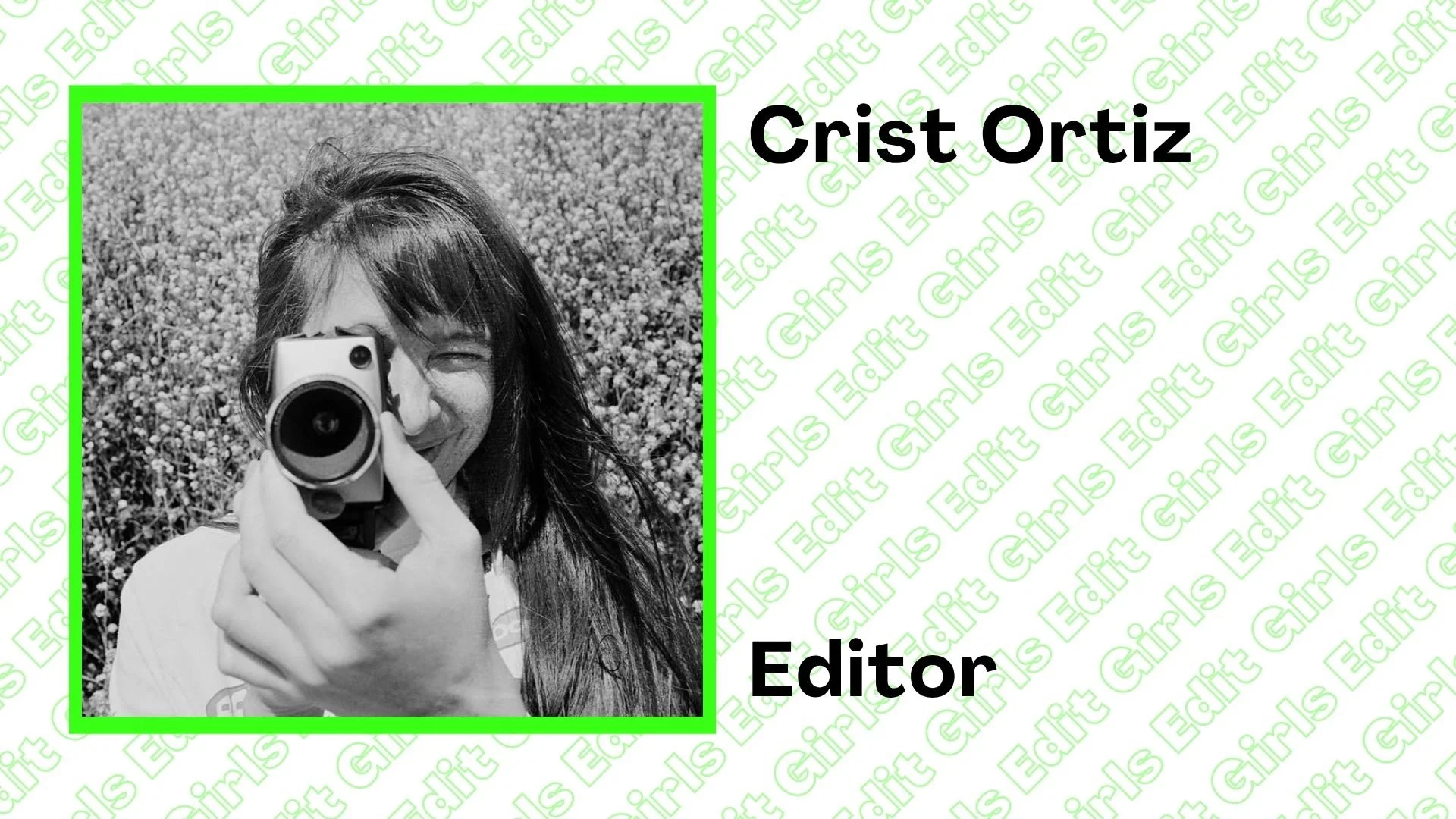
Meet Crist Ortiz, a Miami based editor who revels in the creative exchange between editor and director. Key for Crist is the editing process starting long before sitting in front of a computer screen; the conversations, the shared references, all the elements that lead up to that first ingest are an essential part of her process, as well as taking great care to organise her projects meticulously to save time later in the edit. Enjoy Crist’s career story!
Describe your job role and the kinds of projects/clients you work with.
I’m a freelance film and video editor, sound designer, and post-production professional specializing in documentaries, narrative films, commercials, branded content, music videos, and social media campaigns.
My work spans both short - and long-form content, including feature documentaries, episodic series, promotional campaigns, and digital content for major brands and entertainment companies. I collaborate closely with directors, producers, agencies, and creatives to shape stories through editing and sound design, often involving workflow management, and final delivery for broadcast, streaming, and digital platforms.
Some of the clients and brands I’ve worked with include Marvel, Universal, Sony, Warner Music, NBCUniversal, AT&T, Walmart, DoorDash, McDonald’s, Inter Miami CF, Apple TV, and Hard Rock Bet.
What does an average day look like in your post-production working world?
For me, being an editor is about being a storyteller. Because of that, my process starts long before I sit down in front of a computer and begin cutting footage.
Usually, once a project is approved, I have my first meeting with the director, producer, or creative team. They share references, mood boards, and the overall vision for the piece. Every project is different, but those early conversations give me the creative input I need to start thinking about the story, the structure, the pacing, and even the music.
When I receive the footage, the first thing I do is get organized. I like to build selects by scene, color code everything, and use markers so I can easily find what I need later. Taking the time to organize the material upfront makes the entire editing process much easier.
Once I've watched all the footage, I usually write out the structure of the story on paper. I know it sounds old school, but that's how my brain works best. Even for music videos, I like to think in terms of structure, narrative and story arcs. If questions come up during this stage, I stay in close communication with the director.
Then the editing begins...
Every project has a different timeline depending on the amount of footage and the scope of the work, but once the prep is done, that's when the fun part starts. I like to think about editing through two fundamental elements: 1 structure, the reason behind the story and 2 feeling, how that story is communicated to the audience.
A big part of my process is also making the piece feel immersive and sensory through sound design. Sound is incredibly important to the way I tell stories and often helps shape the emotional experience as much as the visuals do.
Once I have a first cut that feels solid, I share it with the director and we begin the feedback process. Honestly, that's one of my favorite parts. The back and forth, the experimentation, the "what if we try this?" conversations, it's where the project really evolves into something better. At its best, editing is a collaborative process, and I love being part of that creative exchange.
How did your career in post-production begin?
Technically, it all started because I used to skateboard. My first edits were skate videos that I made with my friends.
What has been your career highlight?
I think one of the highlights of my career was transitioning into narrative work, including short films and documentaries. Those projects allowed me to explore storytelling on a deeper level and helped shape the kind of editor I wanted to become.
Who are your role models in post?
Thelma Schoonmaker is definitely my biggest role model. She inspires me not only as an editor, but also as a woman in film.
What advice do you have for others wanting to start a career in post?
Take risks, experiment, make mistakes, and play. And just as importantly, lean on your community to create the kinds of things that excite and inspire you.
Connect with Crist on Instagram
Crist Ortiz’s website